- There are no more items in your cart
- Shipping
- Total £0.00
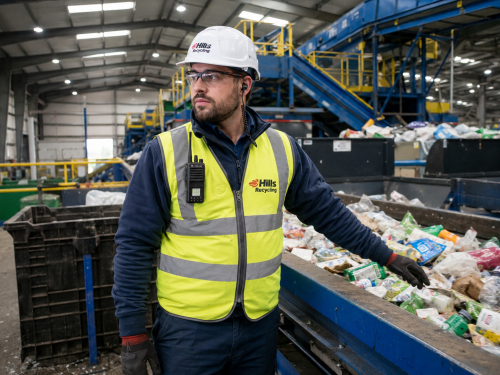
Radio earpieces and headsets are critical communication tools for MRFs (Material Recovery Facilities) and transfer stations, where high noise levels, hazardous machinery, and fast-moving operations make standard communication methods ineffective. Industrial-grade, noise-cancelling earpieces with PTT functionality help workers stay safe, coordinated, and efficient throughout every shift.
Walk through any busy MRF or transfer station and the communication challenges become immediately obvious. Conveyor belts roar, compactors crash, and forklifts beep in every direction. Shouting across a sorting floor is futile. Mobile phones are impractical — and in many cases, a safety hazard. Yet clear, real-time communication between workers, supervisors, and plant operators isn't optional. It's what keeps the whole operation running safely and on schedule.
This is exactly where radio earpieces and headsets step in. Designed for demanding industrial environments, these tools give waste-processing workers a reliable, hands-free way to communicate instantly — without stepping away from machinery or removing PPE. The right headset can be the difference between a near-miss and a serious incident.
This guide covers everything facilities managers and procurement teams need to know: why standard communication fails in recycling plants, what to look for in an industrial radio earpiece, and which products are best suited to MRF and transfer station environments.
Why Do Standard Communication Tools Fail in Waste-Processing Environments?
Most off-the-shelf communication devices simply aren't built for the conditions found in recycling facilities. Ambient noise levels in MRFs regularly exceed 85–95 dB — well above the threshold at which unprotected hearing begins to sustain damage, according to the Health and Safety Executive (HSE). At those levels, a standard radio speaker clipped to a hi-vis vest becomes practically useless.
Beyond noise, the environment itself is hostile to electronics. Dust, moisture, and mechanical vibrations are constant. Facilities processing wet organic waste or working in outdoor transfer yard conditions face the added challenge of rain, mud, and temperature swings. Consumer-grade devices fail fast under these conditions.
Then there's the physical dimension. Workers operating baling machines, sorting conveyors, or loading vehicles cannot hold a radio handset to their ear. Any communication tool that requires a hand to operate creates a distraction — and in an environment with moving machinery, distractions cost lives.
The solution is purpose-built: radio earpieces and headsets that are rugged, noise-isolating, hands-free, and compatible with the two-way radios already in use at most sites.
Key Benefits of Radio Earpieces for Waste-Processing Facilities
How do radio earpieces improve safety in high-noise plant environments?
The most immediate benefit is safety. When a supervisor needs to alert a floor worker to an incoming vehicle, a jammed conveyor, or a spillage hazard, the message needs to arrive clearly and instantly. A good radio earpiece delivers audio directly to the ear canal, bypassing ambient noise entirely. Workers receive critical alerts without looking away from the task at hand.
Many facilities also implement emergency communication protocols using PTT (Push-to-Talk) radios. Earpieces with in-line PTT functionality allow workers to trigger a transmission with a single button press — even while wearing gloves — without fumbling for a handset.
What operational efficiency gains come from hands-free communication?
Miscommunication is expensive. When a sorting operative misses instructions about incoming material, or a vehicle driver doesn't receive updated bay assignments, the knock-on effect can halt an entire processing line. Radio earpieces eliminate the need to shout, repeat instructions, or stop machinery to relay information.
Hands-free operation also means workers stay at their posts. A worker wearing an earpiece can receive and respond to instructions mid-task, keeping throughput steady. Facilities that have upgraded to proper in-ear radio communication frequently report fewer workflow interruptions and faster response times from floor staff.
Can radio earpieces help reduce hearing damage risk for workers?
Yes — and this is an often-overlooked benefit. Standard over-ear hearing protection can muffle radio communications to the point where workers remove their PPE entirely to hear better, which undermines the purpose of wearing protection at all. Specialist noise-attenuating radio earpieces integrate hearing protection and communication into a single device. Workers get both clear audio and appropriate noise isolation, removing the trade-off.
Types of Radio Earpieces Suitable for MRFs and Transfer Stations
Not every earpiece is fit for purpose in a waste-processing environment. Here's what to look for across the main categories:
Rugged, Waterproof Earpieces Built for Dusty, Wet Conditions
Look for devices rated to at least IP54 or higher. An IP55 or IP67 rating provides meaningful protection against dust ingress and water jets — both realistic conditions on a sorting floor or outdoor transfer site. The cable and connectors should be reinforced, since repeated bending, snagging, and contact with debris will quickly destroy a standard cable.
Heavy-Duty Noise-Cancelling Headsets for Loud Plant Environments
Over-ear headsets with active noise cancellation (ANC) or passive noise attenuation are best suited to the loudest areas of a facility — near balers, shredders, or trommel screens. These headsets block harmful ambient noise while routing clear radio audio to the operator. The best models combine hearing protection ratings (such as SNR 26–30 dB) with high-quality speaker output.
Two-Way Radio Earpieces with PTT Functionality
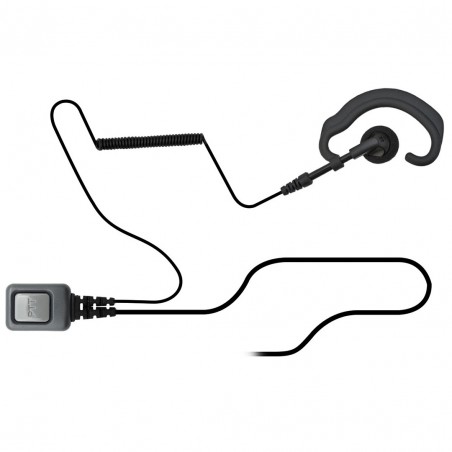
PTT earpieces are the workhorse solution for most plant floor communication. They connect to compatible two-way radios (Motorola, Kenwood, Hytera, and others) via a keyed connector, and allow instant communication with a single button press. Coiled-cable acoustic tube designs route sound cleanly to the ear while keeping the radio on the belt or in a pocket.
Custom-Fit and Moulded Earpieces for Extended Shift Comfort
Comfort matters more than many facilities managers initially appreciate. A worker wearing a poorly fitting earpiece for an eight- or ten-hour shift will find workarounds — removing the device, adjusting it constantly, or reporting it as uncomfortable and abandoning it entirely. Custom-moulded earpieces, formed to the individual wearer's ear canal, dramatically improve compliance and reduce ear fatigue over long shifts.
Recommended Radio Earpieces for Recycling and Waste-Processing Facilities
The following products from Earpiece Online are well-suited to MRF and transfer station use, offering a range of options depending on noise levels, radio compatibility, and budget.
Browse the full range of radio earpieces here
Below are four standout options to consider:
Product 1: Acoustic Tube Earpiece with In-Line PTT
A reliable, entry-level acoustic tube earpiece compatible with most major two-way radio brands. Ideal for general floor communication where noise levels are moderate and workers need a lightweight, unobtrusive solution.
View product →
Product 2: Surveillance Kit with Coiled Cable
A popular choice for supervisors and team leaders who need clear, discreet audio. The coiled cable keeps the connection tidy and reduces snagging risk around machinery.
View product →
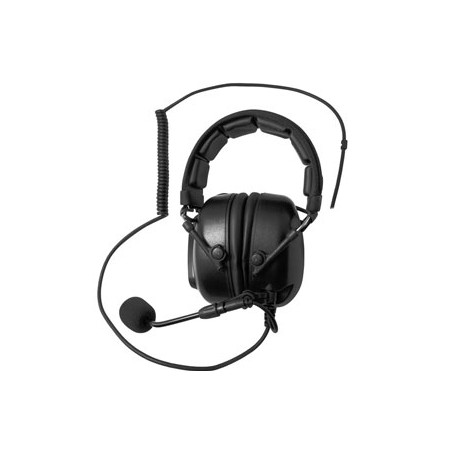
Product 3: Heavy-Duty Noise-Cancelling Headset
Designed for high-noise environments, this headset offers both passive noise attenuation and clear radio audio output. Suitable for operators working near balers, compactors, and shredding equipment.
View product →
Product 4: Moulded Custom-Fit Earpiece
For facilities where staff wear earpieces throughout full shifts, custom-moulded options provide significantly better comfort and a secure seal. Available in a range of connector types to match your site's radio fleet.
View product →
How to Choose the Right Radio Earpiece for Your Facility
What noise level assessment should guide earpiece selection?
Start by measuring or estimating ambient noise levels across your site. Different zones — a sorting cabin versus an outdoor bay, for example — may have very different requirements. For areas exceeding 90 dB, over-ear headsets with hearing protection ratings are strongly recommended. For lower-noise zones, acoustic tube earpieces offer a lighter, more comfortable solution.
What durability and environmental resistance standards are needed for waste plants?
At minimum, look for IP54-rated devices for any earpiece used near sorting conveyors, tipping halls, or wet processing areas. For outdoor transfer stations or facilities handling food waste, IP55 or higher is more appropriate. Reinforce your purchase decision by checking cable quality — braided or rubberised cables last considerably longer than bare plastic in harsh environments.
How do you ensure radio earpiece compatibility with existing communication systems?
Most two-way radios use a keyed connector specific to the manufacturer. Motorola, Kenwood, Hytera, Icom, and Sepura all use different connector types. Before purchasing earpieces, confirm the make and model of your site's radios and select earpieces with the matching connector. Multi-pin and two-pin connector options are widely available.
What comfort features matter for workers on long shifts?
For workers wearing earpieces for six or more hours continuously, the priority features are: a lightweight design that doesn't pull on the ear, a secure but non-clamping fit, and the option of an over-ear loop to prevent the device working loose during active movement. For the highest levels of long-shift comfort, invest in custom-moulded earpieces — the upfront cost is offset by significantly better compliance across your workforce.
Frequently Asked Questions
Are radio earpieces suitable for use alongside hearing protection in noisy recycling plants?
Yes. Specialist acoustic tube earpieces and noise-attenuating headsets are designed to work alongside, or as part of, hearing protection requirements. Some models offer integrated hearing protection ratings (SNR) and route radio audio directly into the ear canal, so workers don't have to choose between communication and protection.
What IP rating should a radio earpiece have for use in a MRF or transfer station?
IP54 is the minimum recommended for indoor plant use. For outdoor transfer stations, wet processing environments, or facilities handling liquid-contaminated waste, IP55 or IP67 provides better long-term protection against water ingress and dust.
Which two-way radio brands are compatible with industrial earpieces?
Most industrial radio earpieces are available with connectors compatible with Motorola, Kenwood, Hytera, Icom, and Sepura radios. Always verify your radio's make and model before purchasing to ensure connector compatibility.
How long do radio earpieces typically last in industrial use?
Lifespan varies by build quality and conditions. Budget acoustic tube earpieces may last six to twelve months under daily industrial use. Higher-quality, reinforced earpieces with robust cabling typically last two to three years or longer with basic maintenance.
Can earpieces be shared between workers on different shifts?
Hygiene considerations make sharing single-use acoustic tube inserts advisable. Many earpieces allow the acoustic tube or ear tip to be replaced, making it practical for multiple workers to share the same unit across shifts while using individual inserts.
Radio Earpieces Are a Safety-Critical Investment for Modern Waste Facilities
Effective communication underpins every aspect of safe, efficient plant operation. When workers can relay information instantly, supervisors can coordinate in real time, and emergency alerts reach the right people at the right moment, the whole facility runs better — and more safely.
For MRFs and transfer stations, that means investing in communication equipment designed for the environment: rugged, noise-isolating, hands-free, and built to last. The cost of a quality radio earpiece is negligible compared to the cost of a production stoppage, a near-miss incident, or a preventable injury.
(43) (0)
 Whatsapp
Related Products
-
Two way radio headset
Two Way Radio Headset, over the head and sit against each ear, are excellen...
-
G -shaped Overt Earpiece
G-shaped earpieces (which form a ‘G’ shape as opposed to the ‘D-ring’ desig...
-
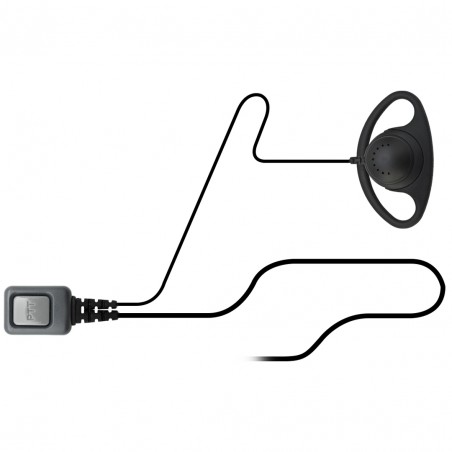
D-Ring Covert Earpiece
Our Top quality, flexible rubber D fits comfortably over the ear. The PTT a...
-
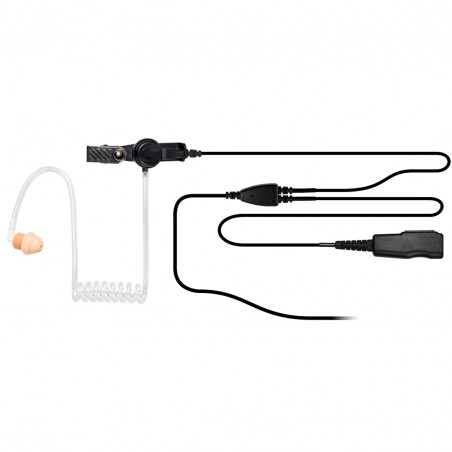
Covert Acoustic Tube Earpiece
Enhance your covert communications with our 2-wire kits, featuring a combin...